


There is a particular look on a smart alpine terrace: quiet, well cut, faintly understated — and it almost always belongs to someone who actually skis. Dressing for a luxury ski holiday is not a question of buying the most technical jacket in the shop or the most expensive label on the rail. It is about layering sensibly, choosing fabrics that behave at minus fifteen, and knowing when to leave the logo at home. Get those three things right and you will look at ease from the first lift to the last glass of wine.
Start With the Base Layer
Everything above the skin depends on what sits against it. Merino wool is the reliable British answer: it regulates temperature, resists odour and stays comfortable across a long day, which matters when you are wearing the same layer from breakfast until four o'clock. Fine synthetic blends are cheaper, dry faster and work well if you run hot. What you want to avoid is cotton, which soaks up sweat, holds it, and leaves you cold the moment you stop moving.
Buy two or three sets and treat them as underwear, not outerwear — close to the body, no bunching under the boot liner, no visible bulk at the wrist. The same logic applies to socks. One thin merino pair inside a well-fitted boot beats two thick pairs every time; extra fabric folds, rubs and produces blisters. If your boots are hired, take your own socks to the fitting and be honest about your ability. A boot that is one size wrong will ruin a week far more effectively than any fashion misstep.
Midlayers: The Part Most People Get Wrong
The mountain is a series of small climates. You will be warm on the lift in sun, cool in the shade of a tree line, and hot again within ten minutes of walking into a chalet. That is why midlayers should be light, packable and easy to remove without wrestling with a zip while wearing gloves.
A thin fleece, a lightweight down or synthetic jacket, or a quilted gilet all do the job. Zip-neck styles are more useful than crew necks because you can vent without taking anything off. If you are layering a down midlayer under a shell, keep it slim — a puffy jacket squeezed under a tight outer layer flattens the insulation and restricts your shoulders, which is exactly where you need freedom when you are poling across a flat traverse.
The Outer Layer: Where Style Meets Weather
This is the piece people notice, so it is worth getting right on both counts. Look for a proper waterproof and breathable membrane, taped seams, a hood that fits over a helmet, and pit zips you can open from the outside. A snow skirt is genuinely useful, and cuffs with adjustable Velcro make more difference to warmth than an extra layer underneath.
Trousers deserve the same attention. Braces keep them where they should be, vents keep you from overheating on a spring afternoon, and reinforced hems survive contact with ski edges. Fit matters more than branding: too baggy and you look like you borrowed them, too tight and you cannot bend into your boots.
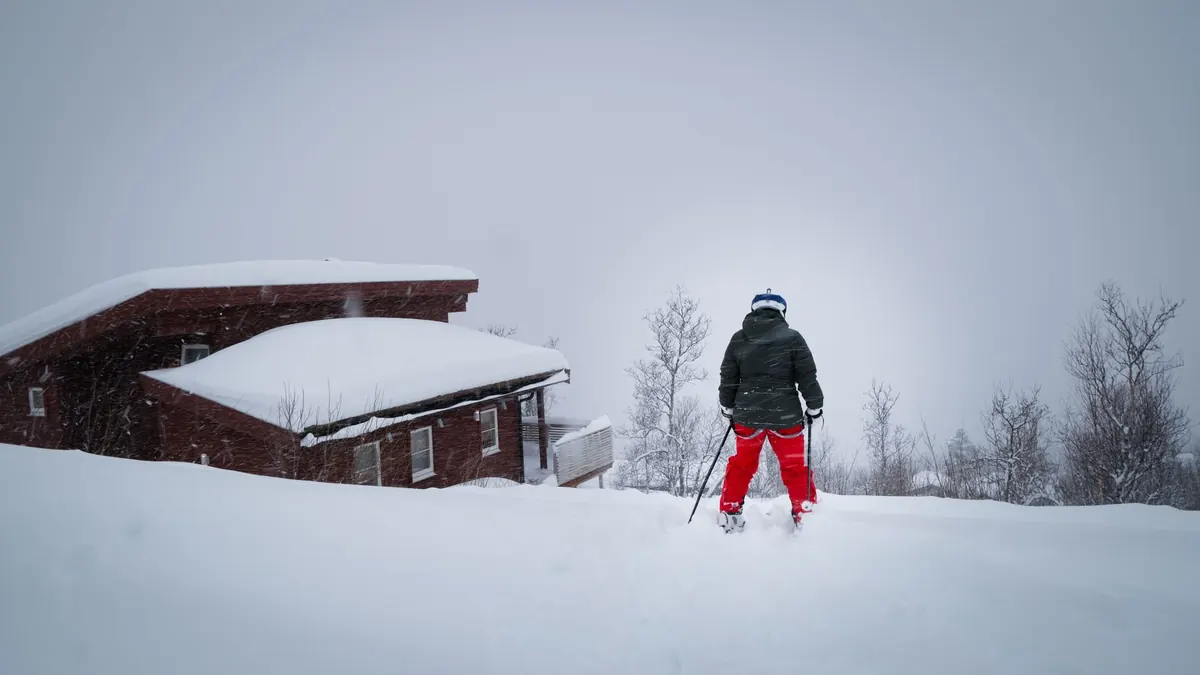
On colour, British taste usually favours restraint — navy, charcoal, deep green, olive, a warm off-white if you are confident. Full neon from head to toe reads as a hire shop rather than a considered wardrobe. If you want a flash of colour, put it in your hat, your goggles or your gloves, where it lifts the whole outfit rather than shouting over it.
Accessories Do the Heavy Lifting
- Head: a helmet is warmer than a hat, and most smart resorts now assume one. Take a thin beanie for lunch and for the walk to the spa.
- Goggles: one frame with two lenses — a dark tint for sun, a lighter one for flat light and snow. This is the single most useful upgrade you can make.
- Gloves: mittens are warmer, gloves are more dextrous. Bring two pairs so a wet one can dry overnight, plus thin liners for cold mornings.
- Neck: a merino or fleece neck tube, not a bulky scarf that flaps and catches the wind.
- Sun: high-factor sunscreen and a lip balm with SPF. Snow reflects a great deal of UV, and altitude increases it further, so reapply at lunch even when it feels overcast. If you have a skin condition or take medication that affects sun sensitivity, ask a pharmacist before you travel.
- Bag: a slim backpack or a bum bag for a flask, a phone and a spare lens. Anything larger and you will be fighting it on every chairlift.
From the Last Run to the First Drink
Après has its own dress code, and it is not ski wear. Boots off, wet jacket hung up, something dry on. A cashmere or fine-knit jumper, dark jeans or tailored trousers, and leather Chelsea boots will take you from a crowded terrace to a chalet dining room without a change. Shearling and suede look wonderful in a photograph and less so in a slush puddle, so keep them for the evening.
For dinner, aim for polished but relaxed: a jacket for men if the hotel suggests it, a silk shirt or a knitted dress over trousers, jewellery kept simple because you will be taking gloves on and off all week. Check the dress code when you book — some luxury properties still prefer guests to dress for dinner, and knowing in advance saves a quiet word from the maître d'. Above all, keep boot bags and damp gear out of the restaurant; nobody thanks the guest whose jacket drips onto the parquet.
Packing for a Week
- Three base layer sets, plus one spare in case of a wet day.
- Two midlayers — one fleece, one thin down or gilet.
- One ski jacket and one pair of trousers; a second pair is worth it for longer trips.
- Two pairs of gloves, two goggle lenses, one neck tube, two hats.
- Evening clothes for every night, including one smarter outfit.
- Swimwear for the pool or spa, trainers for the village, and blister plasters for the first two days.
Small Things That Make the Week
Book boots and skis in advance and collect them the afternoon you arrive, not the morning of your first lesson. Take the time to try two or three pairs of boots before you settle — a good fitter will ask about your level, your foot shape and any old injuries. Check that your travel insurance covers skiing and, if you plan to go off-piste, that it covers you away from marked runs; the small print is where the surprises live.
Finally, give yourself a slow first day. Drink more water than you think you need, go easy on the altitude, and if you feel unwell, head down rather than pushing on — and speak to a doctor if symptoms persist. Ski well within your means, dress for the conditions rather than the photograph, and you will spend the week looking like someone who belongs there. That, more than any label, is what luxury actually looks like on a mountain.
Photo: Utkarsh Malviya / Pexels
Related posts
More stories you’ll love reading