


Experiences
Private Jet vs. First Class: Which Offers Better Value for UK Travellers?
September 14, 2026
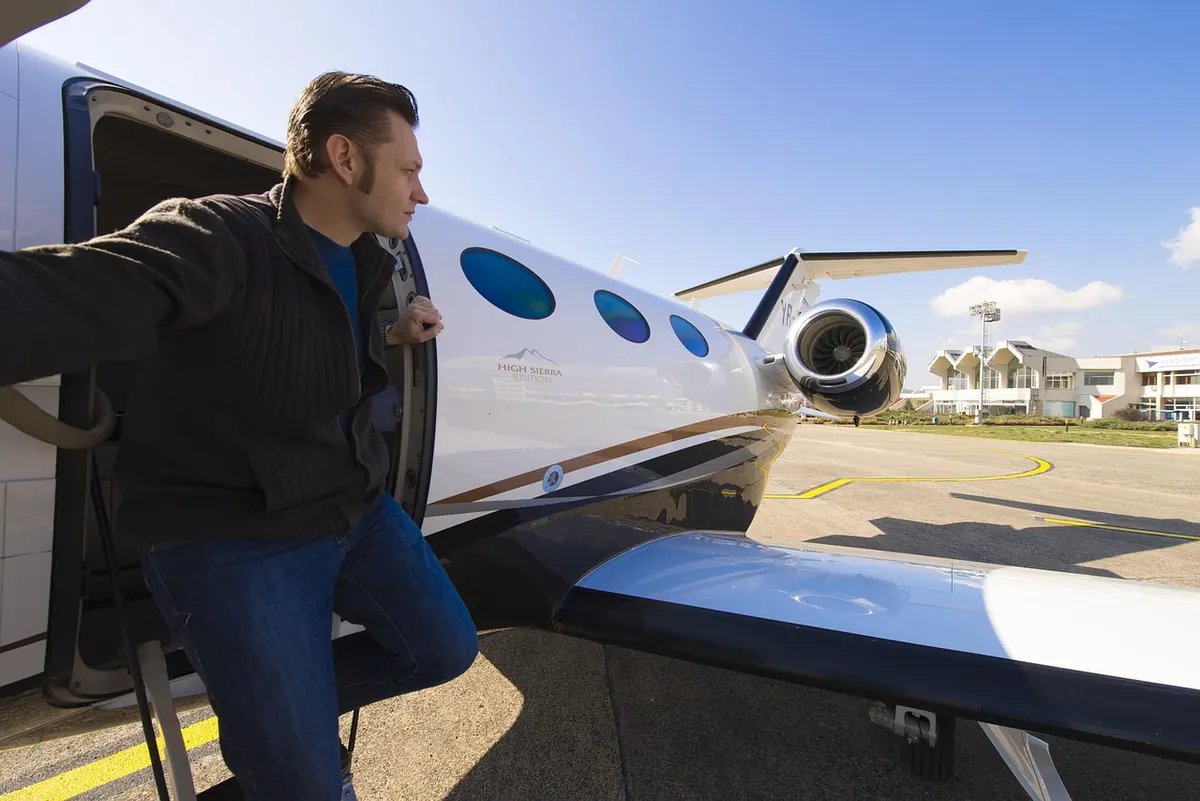
Ask a frequent flyer at Heathrow whether they would rather board a private jet or turn left into a first-class cabin and you will get a long answer. Both promise the same thing: an end to the queue. They deliver it in different ways, at wildly different prices. For UK travellers, the useful question is not which is grander, but which one makes sense for the trip in front of you — and the honest answer changes depending on how many people are travelling, how far, and how much your time is actually worth.
The two products are not really competitors. They are answers to different questions. First class asks: how pleasant can we make a scheduled flight? A private jet asks: how do we avoid the scheduled flight altogether? Once you see it that way, the comparison becomes far less emotional.
The cost question, answered honestly
A first-class ticket is priced per seat. A private jet is priced per aircraft, so the arithmetic shifts with every passenger you add and every mile you fly.
Charter quotes are driven by things most travellers never think about: aircraft size and range, crew duty hours, landing and handling fees, overnight crew costs, positioning flights to reach your departure airport, and the season. De-icing in January, or a departure on the Friday before a bank holiday, costs more than the same hop on a wet Tuesday in November.
Compare per person before you decide. A light jet carrying six on a short European hop can, on the right day, come within reach of flexible business-class fares. Put three passengers in the same aircraft and the per-head figure roughly doubles. A long-haul private flight is a different order of spending altogether, well beyond the priciest first-class return.
Some rough shapes of the maths, which vary enormously by operator and date:
- Luton to Geneva, light jet, six passengers, midweek in May. A charter might quote £9,000–£13,000 each way, all in. That is roughly £1,500–£2,200 per person. The same route in a fully flexible business-class fare could run £400–£900 per person — but if you are booking 48 hours out for a meeting you cannot move, that gap narrows sharply.
- Farnborough to Nice, midsize jet, four passengers. Expect the per-head figure to land in the same territory as the most expensive refundable fares, with the benefit of leaving at a time of your choosing.
- London to New York, first class return, one passenger. Around £5,000–£9,000. A private long-haul crossing starts in the tens of thousands even before you look at a heavy jet, so for a solo traveller or a couple, first class wins on price without any debate.
Always get quotes in writing and ask what is excluded. Catering, ground transport, landing fees and crew expenses are often billed separately. A quote that looks £2,000 cheaper than the next one frequently turns out to be missing de-icing, parking or the positioning leg.
What first class still does better
Airlines keep the front cabin for a reason. On a long-haul widebody you get a designed suite, a genuinely flat bed, more crew per passenger than anywhere else on the aircraft, and lounges at both ends. Catering is usually more considered than most jet catering, and connectivity is more reliable.
You also get structure. If a flight is delayed or cancelled, the airline must rebook you, and UK passengers have statutory rights on qualifying flights. Private charters sit largely outside that framework: your remedies come from the charter agreement, not from passenger-rights legislation. Read the cancellation and technical-failure clauses before you sign. Some operators will put you on a sister aircraft within hours at no extra cost; others will refund you and wish you luck while you rebook a £600 last-minute seat.
First class also suits the solo traveller and the couple beautifully. The suite is yours, the service is scaled to you, and nobody is asking you to split a fuel surcharge four ways. Add in the ability to redeem frequent flyer miles for the front cabin, and the value case becomes stronger still.
Where private aviation genuinely wins
Charter does not compete on luxury so much as on time, access and control. Those three things are where the money actually goes.
Time on the ground
Turn up 15 minutes before departure at a private terminal, walk to the aircraft, and leave. No connection, no baggage carousel, no immigration hall. On a day trip from London to Edinburgh or Aberdeen, that alone can return two to three hours — often the difference between sleeping at home and sleeping in a hotel.
Airports the airlines do not use
Biggin Hill, Farnborough, Oxford, Leeds East, Dundee, Sion and a long list of small European airfields compress the surface journey at both ends. A ski trip that would end with a two-hour transfer from Geneva can finish twenty minutes from the slopes. A Highlands meeting becomes a same-day return rather than a two-night expedition.
Itineraries that do not otherwise exist
Three cities in one day is impossible on scheduled services and routine on a charter. So is leaving when the meeting finishes rather than when the timetable says, carrying equipment, samples or a dog, or working through the flight with colleagues around a table.
The cheapest private jet is rarely the one with the lowest hourly rate. It is the one that leaves when your meeting ends and puts you home the same evening.
The middle ground worth knowing about
You do not have to choose between a £7,000 suite and a £30,000 aircraft. There are several ways to buy private aviation more cheaply than a one-off charter:
- Empty legs. Repositioning flights sold at a fraction of the normal rate. The catch is that the timing is fixed and the notice short.
- Jet cards and memberships. You buy a block of hours at a fixed rate, usually with positioning fees waived within a region. Good for regular travellers who value predictability.
- Shared and semi-private charters. Scheduled private flights between popular city pairs, sold per seat. Not quite a private jet, but often not far off in time saved.
- Flying first class one way. A common compromise: the overnight leg in a flat bed, the daytime leg in premium economy, and the savings spent elsewhere.
Questions to ask before you book either
- Is the quote all-in, and exactly what is excluded?
- What happens if the aircraft goes technical — rebooking, refund, or nothing?
- Is the operator UK CAA or EASA certified, and does it hold a valid AOC?
- What is the cancellation window, and what does it cost?
- How much baggage, and what runway length does the aircraft need?
- On the airline side: is the fare refundable or flexible, and are you protected if the schedule changes?
A quick way to decide
- Fly first class if you are travelling alone or as a couple, flying long haul, and value a flat bed, lounges and legal protection over flexibility.
- Charter if you are filling the aircraft, the trip is short or medium haul, and the itinerary or the destination airport cannot be served by a schedule.
- Do neither if the honest answer is that a flexible business-class fare gets you there at the right time for a third of the money. Value is not the same as luxury, and the best trip is the one that fits the purpose — not the one that looks best in a photograph.
Photo: ValiGreceanu / Pixabay
Related posts
More stories you’ll love reading